Leveraging AI Automation For B2B for smarter supply chain decisions
Wiki Article
The Future of B2B: Harnessing AI Automation to Drive Success
The landscape of B2B is moving as firms progressively turn to AI automation for tactical advantage. This transformation promises to enhance efficiency and client involvement through advanced innovations. Nevertheless, the assimilation of these tools is not without its difficulties. Comprehending how businesses can browse this advancing surface will certainly be important for future success. What factors will identify the efficiency of AI in this sector? The responses may redefine traditional company designs.Understanding AI Automation in B2B
As businesses progressively look for effectiveness, recognizing AI automation in B2B becomes crucial. AI automation describes the use of expert system modern technologies to streamline and enhance service procedures. In the B2B field, this includes the combination of AI devices to take care of jobs such as data evaluation, consumer interactions, and supply chain procedures. By leveraging maker understanding and natural language processing, companies can enhance accuracy, minimize human mistake, and speed up decision-making (Minarik AI). AI automation assists in the handling of huge quantities of data, allowing organizations to extract useful insights and maximize their operations. As organizations browse this technological landscape, a comprehensive understanding of AI automation's abilities will equip them to stay responsive and affordable to market demandsSecret Advantages of AI Automation for Businesses
While numerous businesses grapple with enhancing operational demands, AI automation presents numerous advantages that can considerably enhance their efficiency. One considerable advantage is performance; AI systems can perform recurring tasks faster and with higher precision than people, thereby freeing and lowering errors up staff members for more critical efforts. Furthermore, AI automation enables data-driven decision-making by analyzing vast datasets swiftly, offering insights that notify service approaches. Price reduction is another essential benefit, as automation minimizes labor expenses and enhances resource allowance. AI can improve scalability, permitting companies to adjust to market modifications swiftly. Inevitably, the integration of AI automation cultivates development, making it possible for companies to continue to be competitive in a quickly advancing landscape.Changing Customer Experiences With AI
AI is reshaping client experiences by enabling tailored interactions and improving interaction. Via the implementation of predictive analytics, organizations can anticipate client demands and preferences, resulting in a lot more customized services. Furthermore, simplifying assistance processes with AI innovation enhances performance and satisfaction, eventually changing the general customer journey.Personalized Communications and Interaction
Personalized communications have actually become a cornerstone of efficient client interaction in the B2B landscape. By leveraging AI-driven options, businesses can customize their communication and offerings to satisfy the special requirements of each customer. Automated systems examine consumer choices, actions, and data, enabling companies to develop tailored experiences that resonate with their audience. This level of personalization not just boosts client satisfaction but additionally cultivates long-lasting loyalty. Additionally, AI tools facilitate real-time communications, permitting services to react promptly and properly to questions and responses. As an outcome, business can develop stronger partnerships with clients, guaranteeing that their services straighten with progressing expectations. Eventually, personalized involvement with AI results in boosted results and sustained success in the affordable B2B market.Predictive Analytics Execution
As companies significantly seek to boost customer experiences, carrying out predictive analytics has become a critical approach in the B2B sector. By leveraging data-driven understandings, companies can anticipate client demands and preferences, allowing them to customize their offerings much more successfully. Anticipating analytics utilizes historical information and innovative algorithms to forecast future actions, allowing companies to recognize potential challenges and chances. This aggressive approach not only enhances client satisfaction but also fosters loyalty by providing appropriate and timely options. In addition, anticipating analytics assists in resource allotment, guaranteeing that advertising initiatives are focused on high-value leads. Inevitably, the assimilation of anticipating analytics outfits B2B firms with the devices necessary to change consumer communications and drive lasting success in a progressively competitive landscape.
Enhancing Support Processes
Enhancing client experiences in the B2B field expands beyond predictive analytics; streamlining support processes plays a vital role. By integrating AI-driven services, companies can automate regular queries and enhance action times, causing increased customer fulfillment. Chatbots and digital aides offer 24/7 support, addressing customer needs quickly and minimizing the burden on human representatives. This automation enables teams to concentrate on complicated issues, fostering even more meaningful communications. In addition, AI tools can examine support information to determine trends and locations for improvement, ensuring continual enhancement of solution quality. As companies embrace these modern technologies, they position themselves as receptive and customer-centric, eventually driving loyalty and service growth in a significantly competitive landscape.Enhancing Operations and Processes
Simplifying operations and procedures in B2B environments is necessary for enhancing total efficiency. By enhancing operations efficiency and automating regular tasks, companies can lower manual mistakes get more info and free up important sources. This change not only enhances performance yet also allows groups to concentrate on strategic initiatives that drive growth.Enhancing Operations Efficiency
Optimizing process performance is crucial for organizations seeking to decrease operational costs and enhance productivity. By evaluating existing procedures, companies can determine traffic jams and redundancies that impede efficiency. Applying structured treatments boosts interaction and partnership among teams, making sure that tasks are completed much more quickly. Using data-driven insights enables companies to make informed choices that fine-tune procedures additionally. Furthermore, adopting integrated technologies can facilitate smooth details circulation, lessening the danger of errors and delays. As organizations accept these adjustments, they not just foster a much more dexterous job atmosphere but additionally place themselves to react swiftly to market demands - AI Automation For B2B. Inevitably, focusing on process efficiency allows organizations to allot resources successfully, driving long-term success in an increasingly competitive landscapeAutomating Regular Jobs
Lots of organizations are significantly turning to automation to manage regular tasks, identifying its prospective to considerably boost functional effectiveness. By releasing AI-driven services, firms can enhance repetitive tasks such as data entry, invoice handling, and customer questions. This shift not just decreases human mistake but additionally frees up beneficial worker time, allowing team to concentrate on critical efforts and value-added jobs. Furthermore, automation can boost reaction times and solution consistency, leading to improved consumer fulfillment. As businesses navigate an affordable landscape, leveraging automation for regular tasks ends up being essential for enhancing operations and maintaining agility. Eventually, this approach fosters advancement and drives development, placing organizations for long-lasting success in the progressing B2B environment.Enhancing Decision-Making With Data Insights

Getting Rid Of Obstacles in AI Execution
Although AI execution holds the pledge of substantial operational improvements, organizations commonly encounter a myriad of obstacles that can prevent progression. Trick barriers consist of data high quality issues, as many ventures struggle with inconsistent or incomplete datasets needed for efficient AI training. Furthermore, resistance to change within the labor force can hamper the adoption of AI technologies, as employees might be afraid task displacement or lack the essential abilities. Budget plan constraints additionally provide a difficulty, limiting financial investment in the needed facilities and ability. Incorporating AI systems with existing procedures can be complex, requiring significant time and sources. Getting rid of these obstacles necessitates a critical approach that consists of complete training, change monitoring, and a commitment to constant enhancement in AI initiatives.Future Patterns: The Next Frontier in B2B Automation
While the landscape of B2B automation continues to progress, emerging patterns are poised to redefine how organizations run. The combination of sophisticated expert system will certainly help with more individualized client experiences, enabling businesses to tailor remedies precisely to customer demands. In addition, the surge of anticipating analytics will allow companies to anticipate market shifts and maximize decision-making procedures. Automation of regular jobs through robot procedure automation (RPA) will certainly enhance effectiveness, lowering functional costs considerably. Furthermore, the fostering of blockchain technology promises improved transparency and safety in purchases. As these innovations gain traction, companies will progressively take advantage of AI-driven understandings to promote cooperation, simplify supply chains, and boost total productivity, marking a transformative change in the B2B landscape.Regularly Asked Questions
What Sorts Of Services Can Profit A Lot Of From AI Automation?
Production, logistics, and client service companies can profit most from AI automation. These markets boost functional effectiveness, minimize expenses, and enhance client interactions, ultimately leading to increased performance and productivity in an affordable market.Just How Can Tiny Services Carry Out AI Automation Successfully?
Little companies can implement AI automation properly by recognizing repeated tasks, choosing straightforward devices, making sure sufficient training for employees, and progressively incorporating services to optimize operations while checking performance and adjusting approaches based on feedback.What Prevail Misconceptions Concerning AI in B2B?
Typical misconceptions concerning AI in B2B include the idea that it is just for huge business, that it guarantees immediate outcomes, and that it can fully replace human decision-making instead of augmenting it. AI Automation For B2B.Just How Does AI Automation Impact Worker Duties and Task Safety And Security?
AI automation reshapes employee functions by streamlining repeated jobs, promoting performance and development. While some anxiety task loss, it usually produces possibilities for upskilling and new settings, ultimately enhancing job safety through added worth and productivity.What Skills Are Required to Take Care Of AI Automation Projects?
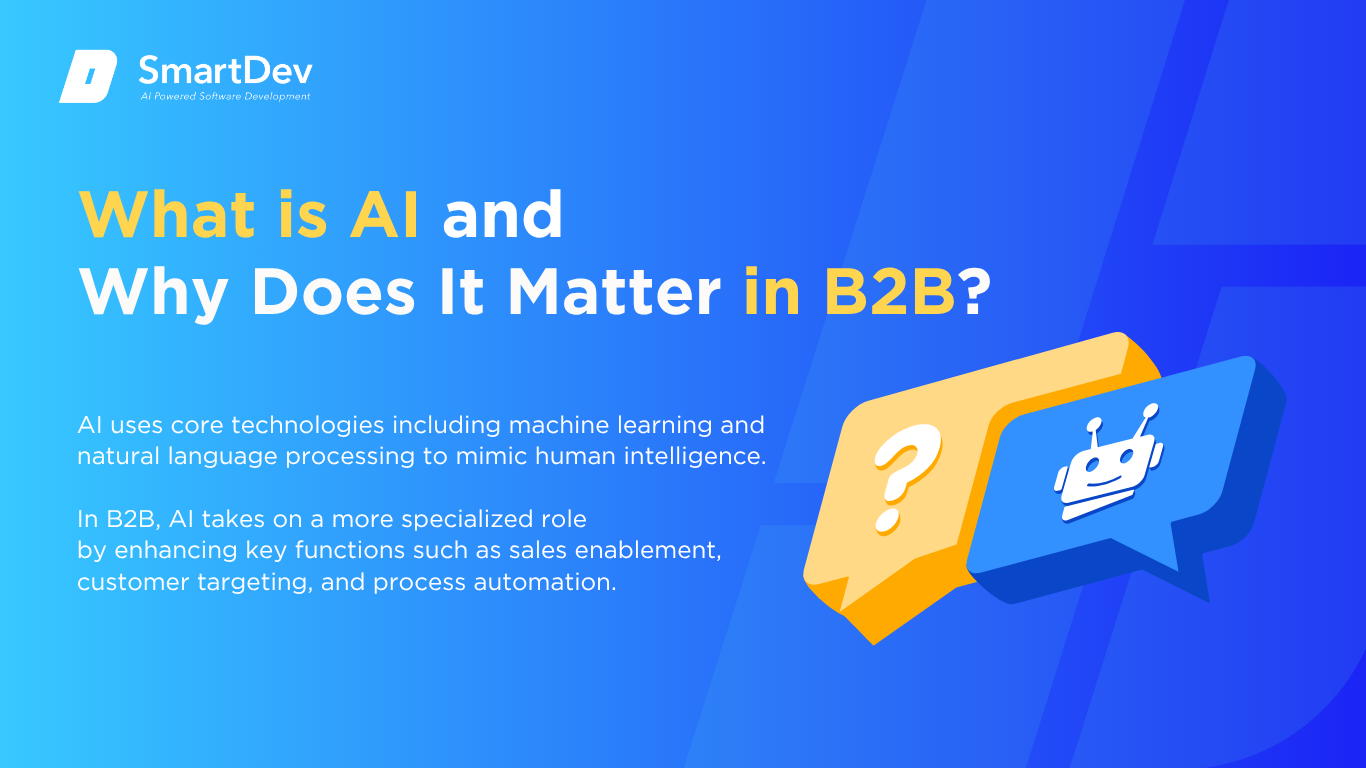
As companies progressively look for performance, understanding AI automation in B2B becomes necessary. AI automation promotes the handling of large volumes of data, allowing services to remove beneficial insights and optimize their operations. While numerous companies grapple with boosting functional needs, AI automation provides many advantages that can noticeably improve their efficiency. Automation of regular jobs via robot procedure automation (RPA) will certainly boost performance, lowering functional prices significantly. Production, logistics, and client solution organizations can profit most from AI automation.
Report this wiki page